Color Theory Basics: The Complete Beginner's Guide
Color theory is the study of how colors interact, combine, and affect human perception. It provides a framework for creating harmonious color palettes and understanding why certain color combinations work. From complementary colors to analogous schemes, color theory guides designers, artists, and anyone working with visual media.
What Is Color Theory?
Color theory encompasses the scientific and artistic principles of color. It includes the color wheel, color harmony, and the psychological effects of color. Pioneers like Johannes Itten (The Art of Color, 1961), Albert Munsell (Munsell Color System), and Josef Albers (Interaction of Color) established foundational concepts still used today.
The Color Wheel
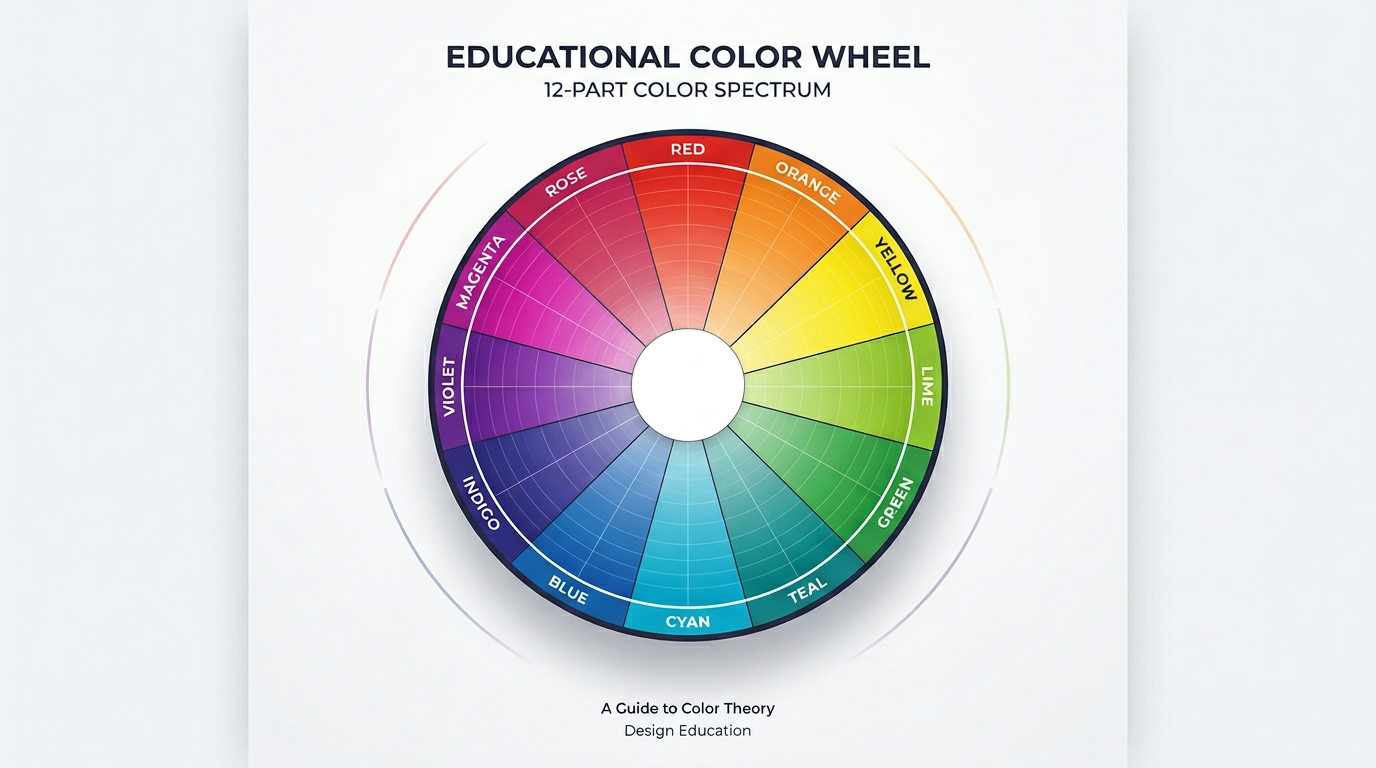
The color wheel organizes colors by their relationships. The traditional RYB (red, yellow, blue) wheel is used in art and painting. The RGB (red, green, blue) model applies to digital screens. CMYK (cyan, magenta, yellow, black) is for print. Understanding the wheel is essential for finding complementary and other color relationships.
Primary, Secondary, and Tertiary Colors
Primary colors cannot be created by mixing others. In RYB: red, yellow, blue. Secondary colors result from mixing two primaries: orange (red+yellow), green (yellow+blue), purple (blue+red). Tertiary colors mix primary and adjacent secondary: red-orange, yellow-green, etc.
Color Harmonies
Color harmony types include complementary (opposite on wheel), analogous (adjacent), triadic (120° apart), split-complementary, and monochromatic. Each creates different visual effects. Complementary pairs offer maximum contrast; analogous schemes feel cohesive.
Warm vs. Cool Colors
Warm colors (red, orange, yellow) advance and feel energetic. Cool colors (green, blue, purple) recede and feel calm. Complementary pairs often combine one warm and one cool color. Learn more in our warm vs. cool colors guide.
How to Apply Color Theory
Use color theory to choose palettes for design, branding, and interiors. Consider hue, saturation, and value. Use the color wheel to find complementary or analogous pairs. Test WCAG contrast for accessibility. Reference our hue, saturation, and value guide for details.
Try It: Find Complementary Colors
Enter a hex code or pick a color to see its complement, split-complementary, and triadic palettes.
Complementary
Split-complementary
Triadic
Related Articles
- Hue, Saturation, and Value Explained
- Warm vs. Cool Colors: The Complete Guide
- The Color Wheel: How It Works
- Split-Complementary Colors Explained
Frequently Asked Questions
What is color theory?
Color theory is the study of how colors interact, combine, and affect perception. It covers the color wheel, color harmony, and practical applications in art and design.
What are primary colors?
Primary colors cannot be created by mixing other colors. In RYB (art): red, yellow, blue. In RGB (digital): red, green, blue. In CMYK (print): cyan, magenta, yellow.
What is the difference between hue, saturation, and value?
Hue is the color itself (red, blue). Saturation is color intensity or purity. Value is lightness or darkness. Together they define the HSV color model.
What are complementary colors?
Complementary colors sit opposite each other on the color wheel. They create maximum contrast. Examples: red and green, blue and orange, yellow and purple.