Complementary Colors in Fashion
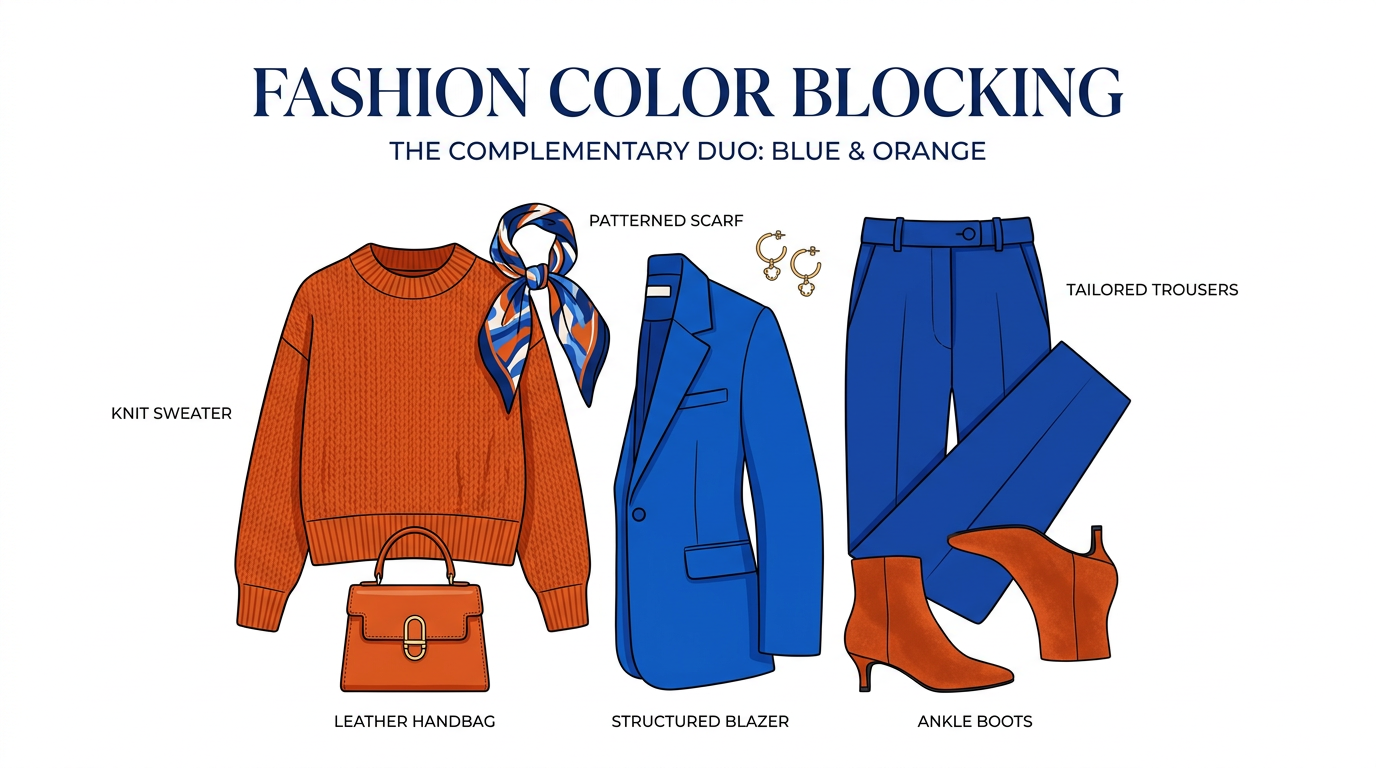
Complementary colors create bold, eye-catching fashion combinations. Use one color as dominant (e.g., a blue dress) and the other as accent (orange shoes, bag). Color blocking with complementary pairs makes a strong statement. Softer tints—blush pink with mint green—work for casual elegance. Explore complementary colors and our color tools for palette inspiration.
Popular Pairs for Fashion
Blue and orange: navy with coral or rust. Purple and yellow: creative, royal. Pink and green: feminine, fresh. Red and green: festive—use sparingly. Brown and blue: classic, earthy.
Color Blocking
Wear large blocks of complementary colors for maximum impact. A blue top with orange pants. A purple coat with yellow accessories. Balance with neutrals (white, black, gray) if needed.
Accent Strategy
Use the 80-20 rule: 80% one color, 20% the complement. A green outfit with red shoes or earrings. A blue suit with an orange tie. Small accents create focus without overwhelming.
Seasonal Considerations
Spring/summer: lighter tints—blush and mint, sky blue and peach. Fall/winter: deeper shades—burgundy and forest green, navy and rust. Use our color finder to explore palettes.
Find Complementary Colors
Enter a hex code or pick a color to see its complement, split-complementary, and triadic palettes.
Complementary
Split-complementary
Triadic
Related Articles
Frequently Asked Questions
What complementary colors look good in fashion?
Blue and orange, purple and yellow, pink and green, and red and green work well. Use one as dominant and the other as accent for balance.