What Is the Complementary Color of Blue?
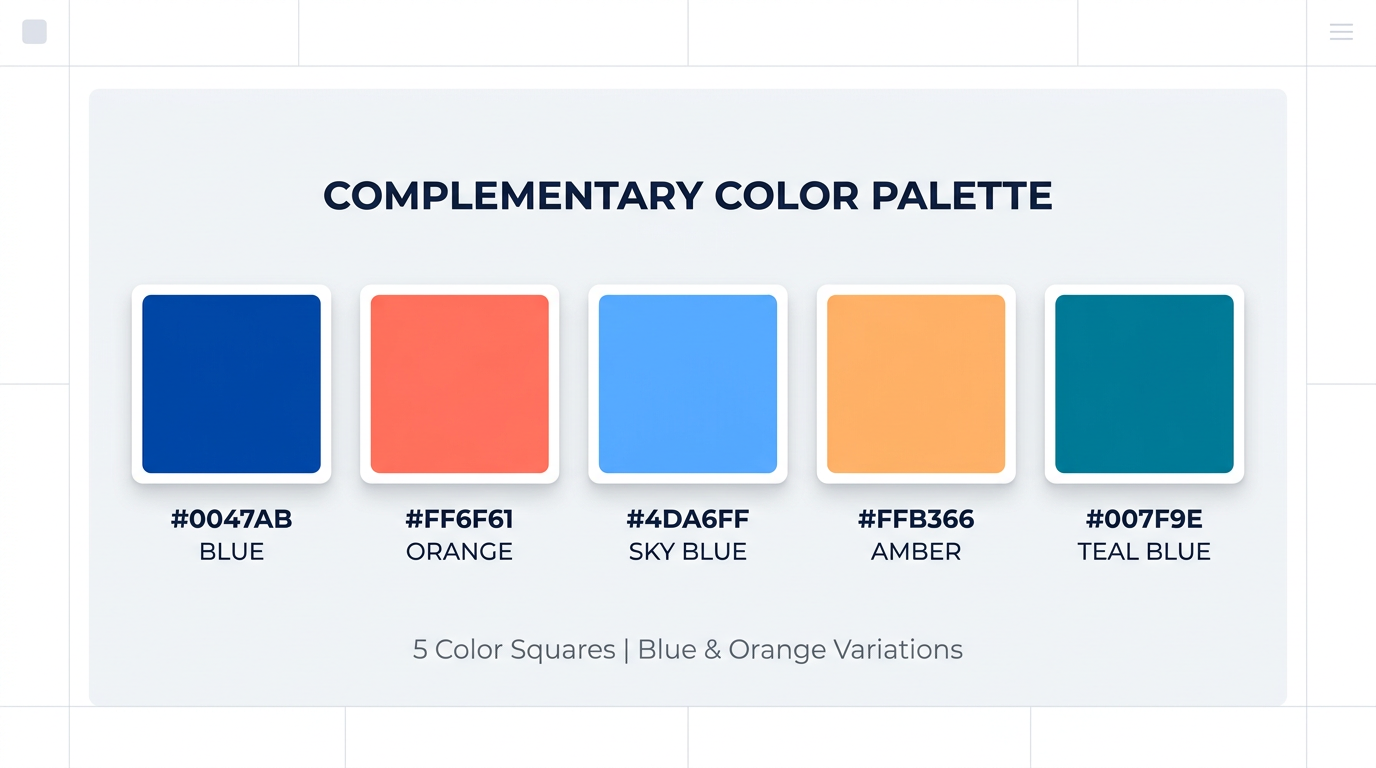
The complementary color of blue is orange. On the traditional RYB color wheel, blue and orange sit directly opposite each other. In digital design (RGB), blue's complementary color is yellow. Blue and orange create strong visual contrast and are among the most popular complementary colors in branding and design.
The Blue-Orange Pair
Blue is a cool color; orange is warm. This warm-cool balance adds depth and interest. The pair is versatile—works in tech, sports, film, and UI design.
Why Blue and Orange Are Complementary
On the color wheel, complementary colors are 180° apart. Blue's position opposite orange creates maximum hue contrast. Josef Albers demonstrated how placing these colors side by side intensifies both. Use our color tools to find exact hex values for any shade.
Famous Examples
Harley-Davidson uses orange and blue. The Los Angeles Lakers use purple and gold (a variant). FedEx combines orange and purple. Many film color grades use blue-orange (teal and orange) for cinematic look. Tech companies favor blue with orange accents for CTAs.
Using Blue and Orange in Design
For design applications, use blue as the dominant (trust, calm) and orange for accents (energy, CTAs). Check WCAG contrast. The color wheel guide explains the relationship in depth.
Variations
Split-complementary with blue: red-orange and yellow-orange. Triadic: blue, red, yellow. Use tints and shades for softer palettes.
Try It: Explore Blue's Complements
Use the tool below to find complementary, split-complementary, and triadic palettes. Pre-loaded with blue.
Complementary
Split-complementary
Triadic
Frequently Asked Questions
What is the complementary color of blue?
The complementary color of blue is orange. On the RYB color wheel, blue and orange sit directly opposite each other. In RGB, blue's complement is yellow.